
Results
-
 £59.70
 -
£29.50
Christmas Csardas - Ed Keeley
Christmas Csardas is a traditional Hungarian folk dance, the name deriving from 'csarda' an old Hungarian term for a roadside tavernThe csardas is characterized by several variations in tempo, usually starting slowly it gradually gains tempo, with moments where the brakes are suddenly applied for a moment of repose, then again gains tempo and ends in a very fast and fresh finale. The dancers are both male and female, with the women dressed in traditional wide skirts, which form a distinctive shape when they whirl.This quirky arrangement of Jingle Bells starting in the traditional czardas minor mode eventually has a fresh atmospheric modulation into the tonic major, and races away for a truly festive finale.
In Stock: Estimated dispatch 1-3 working days
-
 £59.70
Suddenly One Summer (Brass Band - Score and Parts) - Fernie, Alan
Slightly reduced Brass Band instrumentation (no rep cornet, no 2nd horn, no 2nd trombone part)
Estimated dispatch 7-14 working days
-
 £119.99
The Lonesome Knight - Saskia Apon
The composition the Lonesome Knight was based on a fairytale. The piece was written by Saskia Apon for the National Brass Band Championships 2001. Once upon a time there was a knight who went to fight and defeat the dragon that had beenkilling the people of his town. There is a short but intense battle between the two and the knight is triumphant. However whilst persuing the dragon the knight has travelled far away from his home and now is lost. He roames around trying to findhis way home, but exhausted and weary he falls to the ground. He awakens startled by a Giant and a group of Goblins who are celebrating the death of the dragon. The knight joins in the festivities but after a long evening is once more leftalone. The sun rises the following morning and he sees a castle on the horizon. He enthousiastcally ventures towards the castle in the hope of meeting other people. However he becomes greatly disillusioned when there is none to be found. Inhis desperation the knight climbs the tower ready to jump off. Suddenly he hears a heavenly voice. Right before him is the most beautiful princess he has ever seen. She graciously thanks him for killing the dragon, a spark ingnites between themand they build a life together and.... live happily ever after! Saskia Apon studied harp at Rotterdam School of music. With this instrument she rounded of her studies by passing with credit, however it was her love of composition thatremained her focus. Self-taught, she began composing at the age of nine. Since then she has written pieces for The Dutch Brass Quintet, The Dutch Brass Ensemble, The Rotterdam Trombone Quartet and the brass band quintet Brass Ability. Atpresent she is the in-house arranger for The Rotterdam Philarmonic Brass Ensemble. Besides the customary attention for the real splashworks she endeavours to add value to the melodic function of the brass wind instruments in her music. Hercompositions and arrangements can be found on many diverse Cds.The composition the Lonesome Knight was based on a fairytale. The piece was written by Saskia Apon for the National Brass Band Championships 2001. Once upon a time there was aknight who went to fight and defeat the dragon that had been killing the people of his town. There is a short but intense battle between the two and the knight is triumphant. However whilst persuing the dragon the knight has travelled far awayfrom his home and now is lost. He roames around trying to find his way home, but exhausted and weary he falls to the ground. He awakens startled by a Giant and a group of Goblins who are celebrating the death of the dragon. The knight joins inthe festivities but after a long evening is once more left alone. The sun rises the following morning and he sees a castle on the horizon. He enthousiastcally ventures towards the castle in the hope of meeting other people. However he becomesgreatly disillusioned when there is none to be found. In his desperation the knight climbs the tower ready to jump off. Suddenly he hears a heavenly voice. Right before him is the most beautiful princess he has ever seen. She graciously thankshim for killing the dragon, a spark ingnites between them and they build a life together and.... live happily ever after! Saskia Apon studied harp at Rotterdam School of music. With this instrument she rounded of her studies by passing withcredit, however it was her love of composition that remained her focus. Self-taught, she began composing at the age of nine. Since then she has written pieces for The Dutch Brass Quintet, The Dutch Brass Ensemble, The Rotterdam Trombone Quartetand the brass band quintet Brass Ability. At present she is the in-house arranger for The Rotterdam Philarmonic Brass Ensemble. Besides the customary attention for the real splashworks she endeavours to add value to the melodic functionof the brass wind instruments in her music. Her compositions and arrangements can be found on many diverse Cds.
Estimated dispatch 5-14 working days
-
 £109.99
The Power of the Megatsunami - Carl Wittrock
The word 'tsunami' is of Japanese origin. When you look it up in a dictionary, you will find that it means 'a great sea wave produced by submarine earth movement or volcanic eruption'. A megatsunami is the superlative of this awesome expressionof power that nature can create, and has catastrophic consequences. When Carl Wittrock completed this composition not many such big earth movements had occurred, but since then we have become all too familiar with the disastrousconsequences which a tsunami may have. On the 26th of December 2004 a heavy seaquake took place near the Indonesian island of Sumatra. Tidal waves 10 meters in height ravaged the coastal regions of many countries for miles around. The tsunamitook the lives of thousands of people and destroyed many villages and towns. There are more areas which run the risk of being struck by a tsunami, such as the island of La Palma, one of the Canary Islands. This island is based on oceaniccrust at a fracture zone and as such is one of nature's time bombs. The consequences of a natural calamity like a megatsunami are immense. In the case of La Palma, the tidal wave will move in the direction of South America, where it may reach 50km inland, destroying everything on its way. In his composition Wittrock describes an ordinary day which will have an unexpected ending. Right from the beginning there seems to be something in the air, the music creating an oppressiveatmosphere of impending disaster. Themes are interrupted, broken off suddenly, followed by silence, suggesting the calm before the storm. Suddenly a short climax (glissandi in the trombone part) indicates the seaquake, and the megatsunami isa fact. Hereafter follows a turbulent passage symbolising the huge rolling waves. After nature's force has spent itself, resignation sets in and the composition ends with a majestic ode to nature.
Estimated dispatch 5-14 working days
-
 £134.99
Mirage - Jan de Haan
The composition Mirage takes inspiration from the legendary ghost ship "The Flying Dutchman", a story deeply rooted in maritime folklore. Cursed to wander the oceans forever, the ship often looms like a mirage on the horizon - a mysterious apparition in which reality and illusion blend intangibly.In Mirage the music tries to bring this mystical appearance to life. The piece begins with an atmosphere of mystery and wonder, creating the illusion of a mirage. The listener is taken to the vast sea, where the boundaries between the real and the unreal blur and the ghostly silhouette of the ship gradually becomes visible. Suddenly the tone changes. Powerful rhythms and stormy harmonies follow, expressing the ship's battle against the raging forces of nature. After this intense section, in which the musicians are pushed to their limits, the tranquility of the sea returns. The recurring mirages inspired the composer to create a lyrical middle section, in which various soloists tell their stories within this legend. In the final part, the sails are hoisted again, and the three-master continues its endless journey.
Estimated dispatch 5-14 working days
-
 £109.99
Nordic Moods - Tom Brevik
The composer:1st movement: Reflections by the Fjord.Overlooking one of the mighty fjords of Norway, my mind and thoughts are with an old religious Norwegian folk-tune, with words by the famous parson Peter Dass.The majestic fanfare-likeopening reflects the power of God our Father, the choral itself heard for the first time on flugelhorn. The choral is repeated a few times, separated only by some short variations. The movement ends in thriumph, with fanfares and the choral broughttogether.2nd movement: Reflections in the Old Church.In this movement my associations of a summer day, finding myself alone in an old deserted stone church. From the old walls I hear folk songs, perhaps like the ones sung in the church bypoor fishermen and farmers in days gone by. Suddenly the light from the sun breakes through the small circular window above the altar, and a lovely melody is heard, before the original figures take us to the end of the movement.3rd movement:Festive Reflections.Any festive occasion can be reflected in this movement. from the bonfire at midsummer-night to the children celebrating the return of the sun in the northern part of Norway. from the traditional sleigh-riding at Christmas tothe Celebrations of the National Day on the 17th of May each year.
Estimated dispatch 5-14 working days
-
 £159.99
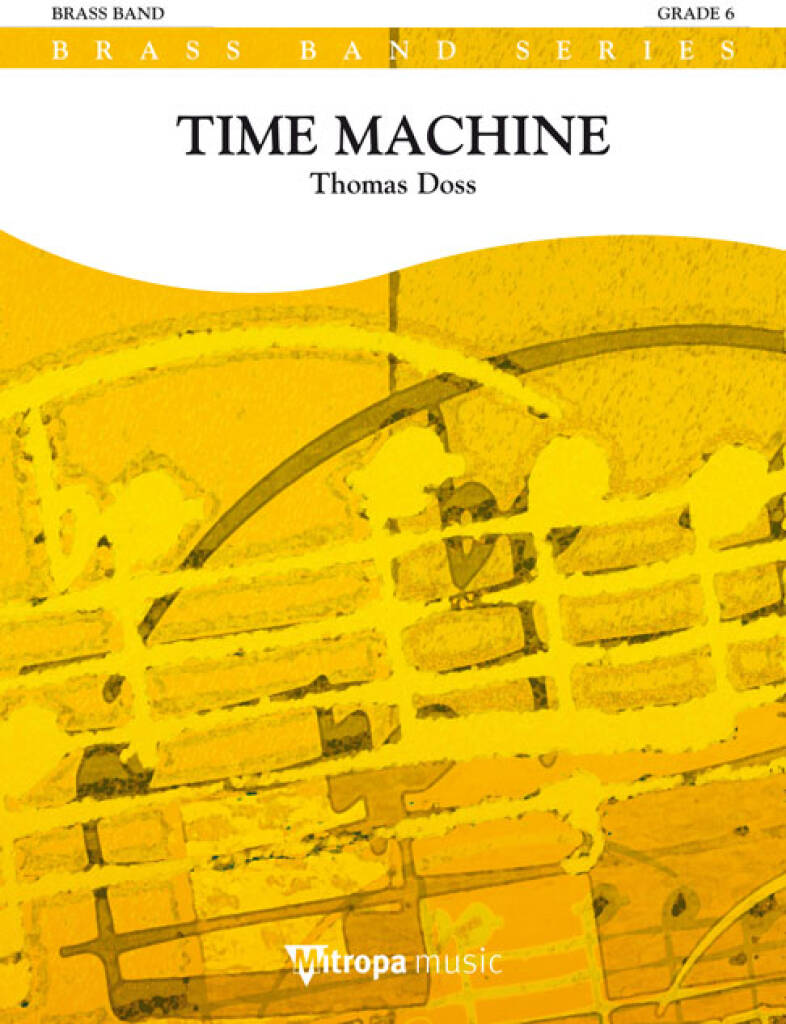
Time Machine - Thomas Doss
Time Machine is a journey through time that begins in the Stone Age. Evolution and the coming of man take place. The journey takes us into the present, in which disorientation and chaos abound. We travel further into the future. An unfamiliar, quiet and surreal landscape lies before us and we wander through it, bewildered as we become aware of the destruction of the environment. Suddenly, and for no reason, memories from our childhood are awoken. Cultures have become completely mixed into one and the evolution of man has run its course. We realise that there is no "afterwards" as before us lies the Stone Age once again... The wheel of time spins blindly on and all isrepeated.
Estimated dispatch 5-14 working days
-
 £99.99
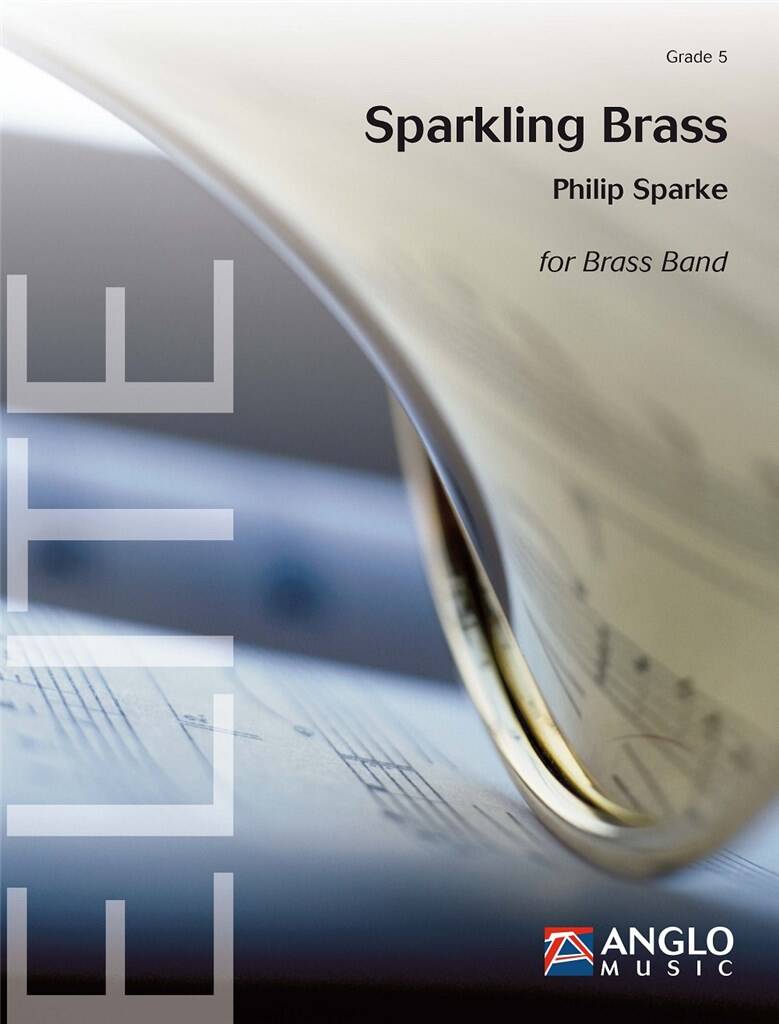
Sparkling Brass - Philip Sparke
Sparkling Brass was commissioned by Osaka Concert Brass, one of Japan's top brass bands, and premiered by them on 27th December 2018 during a concert which celebrated their 10th Anniversary. The work opens in lively mood with fanfare-style figures from the lower band which are answered by the cornets. This interplay intensifies until the mood calms suddenly to introduce a chorale which leads to a duet-cadenza for cornet and euphonium. The rhythmic mood of the opening soon returns and leads to the main theme of the work, a modal caccia which features various section of the band. A short bridge passage leads to a change of key and a new cantabile theme which isintroduced by euphoniums and baritone. This is taken up by the full band after another change of key and leads back to the caccia theme. A transformed version of the opening fanfare returns to close the work.
Estimated dispatch 5-14 working days
-
 £84.99
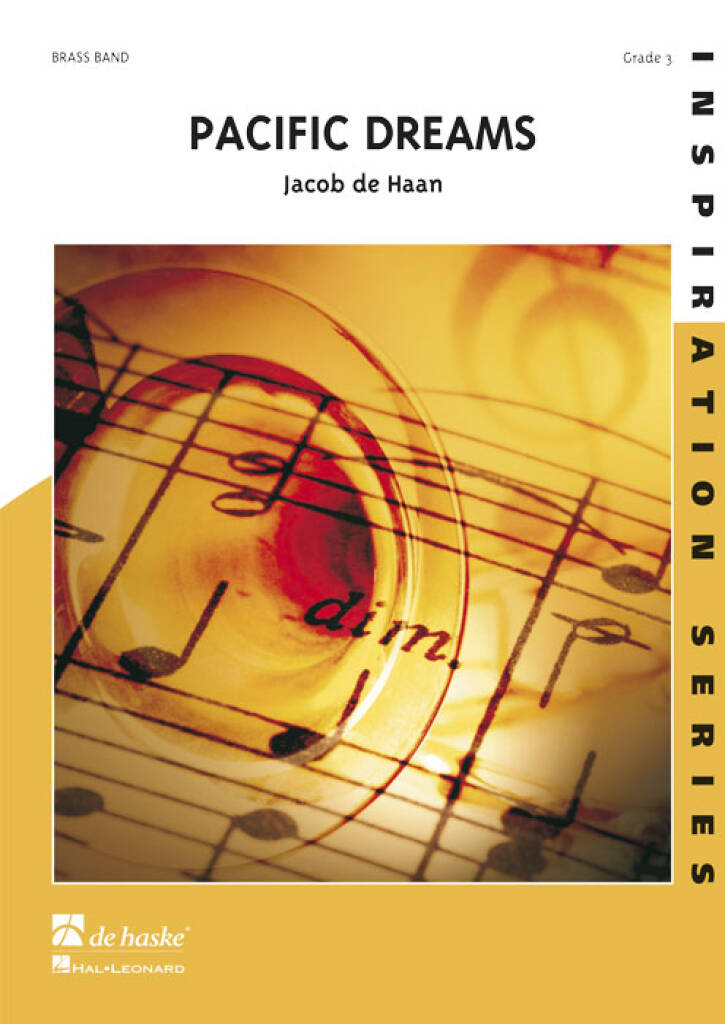
Pacific Dreams - Jacob de Haan
Pacific Dreams describes the experience of Miguel, a traveling composer from Spain who, feeling somewhat alienated from his homeland, is wandering through an area of Sydney known as The Rocks. At a small outdoor market in a typical street of this oldcolonial neighbourhood, he discovers a print of William DeShazos painting "Pacific Dreams" Portrayed in the painting is the surf of one of the exotic islands in the Pacific. Next, with the impressive Sydney Harbour Bridge looming over the narrowstreets of The Rocks, he envisions sultry Pacific beaches. Suddenly a theme he once composed about the lakes in Japan comes to him. Is it the Asian influences present in cosmopolitan Sydney that bring this theme to mind? Or perhaps the waters aroundSydney, over which he could sail to Tahiti? He is uncertain. Could this same theme be used to create a new composition about his feelings for the metropolis Sydney? How then to work his Pacific Dreams into the mix? Miguel is certainly no fan ofHawaiian music. Mayby he could use the vocabularies of islands like Hawaii and Tahiti, their beautiful vowel combinations being sung ad libitum by a mixed choir.With these ideas and his newly purchased print of "Pacific Dreams", he boards the Metroat Circular Quay. He has a final glimpse of the harbour and the Sydney Opera House as the train races into the ground. On to the hotel! To work! He must compose!Maestoso : Miguel is impressed as he gazes upon the Sydney Harbour Bridge. And yet, hewants to go away from this city. Away, to an exotic island in the Pacific.Steady Rock : In the Rocks, musicians are playing at a square. Miguel basks in the atmosphere but at the same time he is fantasizing about Hawaii and Tahiti.Andante Lamentoso :In his hotel room, Miguel is feeling sad and lonely in this big city. He takes comfort in his "Pacific Dreams".Allegro : Miguel boards the boat that takes him from Darling Harbour to Circular Quay. In his mind he is traveling on to Hawaii. Or is ithome, where the bolero is playing? He is pulled back to reality by the skyline of Sydney.
Estimated dispatch 5-14 working days
 View Music
 Listen to MP3