
Results
-
 £29.50
Run - Snow Patrol - Gavin Somerset
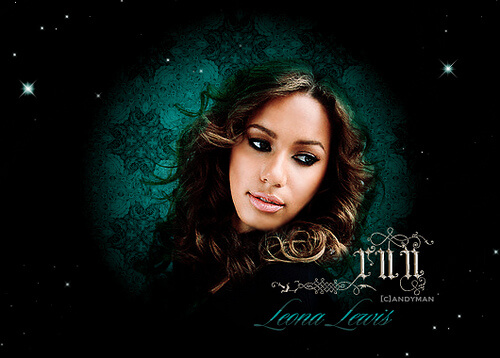
Very few songs covered by other artists are greeted with the same reception as Leona Lewis' cover version of this hit song. Whilst already a hit for Snow Patrol back in 2004, when Leona Lewis performed the song on BBC Radio One's 'Live Lounge', the DJ's and producers there on the day were reported to be tears. This highly emotional song lends itself well to the brass band sound and this arrangement by Gavin Somerset ensures your band can encapsulate audiences both on the bandstand and in the concert hall. The song's title may not be too familiar, however after just a few bars, the tune is instantly recognisable. A hit with the younger members of your band and one that people of all ages will know. A perfect addition to your concert programme and one that could see some of your audience singing!
In Stock: Estimated dispatch 1-3 working days
-
 £150.00
Brass Quintet Collection - Various - Lawrence Killian
20 Titles for Brass Quintet with Optional AugmentationFeaturing stylish arrangements using a flexible format for a minimum of five brass players, this set of music for small ensemble covers a wide range of composers and styles. The collection includes music by Purcell, Bach, Verdi, Gounod, Sousa, Joplin, Botsford, Elgar, Gershwin, and others.Using a unique approach to the scoring, the basic setup is for five players: two cornets/ trumpets, one horn, one trombone, and one bass tuba. Two optional "augment" players can be added using the "flugelhorn", and/ or the "Euphonium" parts. Further expansion of the ensemble is possible by adding multiple players to each part.Twelve parts are provided in total: 1st Bb Cornet, 2nd Bb Cornet, Eb Tenor Horn, French Horn in F, Bb Trombone or Baritone in treble clef, C Trombone in bass clef, EEb Bass, BBb Bass, C Tuba in bass clef, Bb Flugelhorn or Cornet (augment part 1), Bb Euphonium or Baritone (augment part 2), C Euphonium or Trombone in bass clef (augment part 2).A Full score is available seperately at a cost of �35.00. Please contact [email protected] to order. NOTE: Individual books are priced at �20.00 each. Please email [email protected] to order individual books. Videos of these works being performed are available below:- Asturias (Leyenda) from Suite Espanola No.1, Isaac AlbenizBerceuse from "Jocelyn", Benjamin Godard TITLES INCLUDED:- 1. Asturias (Leyenda) from Suite Espanola No.1, Isaac Albeniz 2. Bist du bei mir (Be Thou with Me), J. S. Bach3. Chatterbox Rag, George Botsford4. Grizzly Bear Rag, George Botsford5. Jubilee Fantasy on God Save the King, Bernhard Brahmig 6. Chanson de Matin, Sir Edward Elgar 7. Pomp and Circumstance March No. 4, Sir Edward Elgar 8. But Not For Me, George Gershwin 9. By Strauss, George Gershwin10. They All Laughed, George Gershwin11. Berceuse from "Jocelyn", Benjamin Godard12. JUDEX - from "Mors et Vita", Charles Gounod 13. The Entertainer (Rag), Scott Joplin14. Intermezzo No.2, Vasily Sergeyevich Kalinnikov 15. Berliner Luft, Paul Lincke 16. Sound the Trumpet, from "Come Ye Sons of Art", Henry Purcell 17. Gymnopedie No.1, Erik Satie 18. The Liberty Bell March, John Philip Sousa 19. Tritsch-Tratsch Polka, Johann Strauss II 20. Grand March from the opera Aida, Giuseppe Verdi
In Stock: Estimated dispatch 1-3 working days
-
£29.50
Pachelbango - Pachelbel - Ed Keeley
Pachelbel's most famous work as you've never heard it before. This arrangements features all sections of the band and gives them a chance to shine making the piece perfect for both concert or contest venues. Pachelbel's Canon in D is one of the most famous pieces of classical music of all time. Simply written for 3 violins and a cello, the music is basically 8 bars repeated 28 times. Mostly unforgotten until the 1970s it has become one of the most recorded pieces and used at more than 90% of all weddings as an introit. This arrangement has reset the Canon into a Latin-American tango style, pushing it into a new accessible groove and will bring a smile to your audiences & players. A must have for your upcoming concerts.
In Stock: Estimated dispatch 1-3 working days
-
 £37.50
Carnival Of Venice - J. Arban - Jonathan Bates
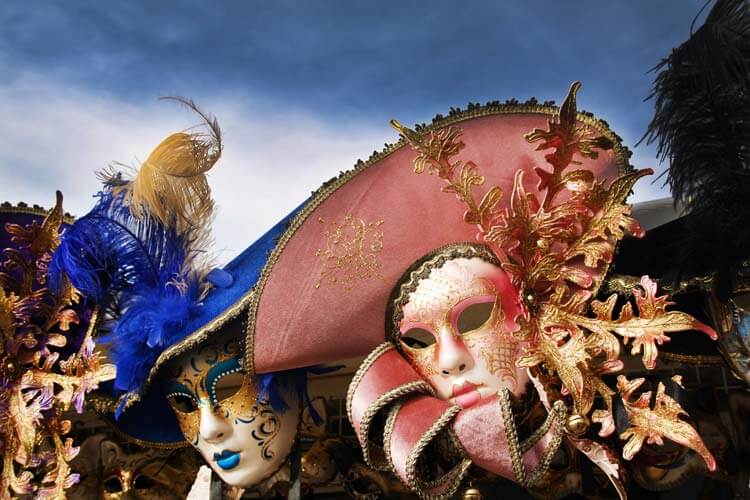
One of the most famous pieces of music, arranged by the most famous pioneer of the modern cornet, is now available for band as an Eb solo, allowing either the soprano, solo horn or Eb Bass player to turn their hand to this remarkable piece. Arranged by Jonathan Bates, little more needs to be said about this work as this timeless classic has been entertaining audiences for years. Now its time for the Eb soloists of the banding world to have a chance to play one of the most difficult, virtuoso solo pieces of all time.
In Stock: Estimated dispatch 1-3 working days
-
£37.50
Polish Adventures - Gavin Somerset
Composed for the All Saints Wind Band, Sheffield after their trip to Poland in the summer of 2003. This work reflects the different parts of the tour in four continuous movements... PROGRAM NOTES AS THEY APPREAR ON SCORE COVER I don't wish to ramble on with the program notes, do I do believe that if you know the story behind a piece of music, it just puts that extra something into the players performance. In 2002, the All Saints Wind Band, Sheffield, embarked on a 10 day tour of Poland. The group spent 28hrs on a couch packed with instruments, only to arrive finding Poland experiencing its worst summer in 70 years. In 2003, they decided to go back for another go! This time, luxury all the way, no 28hr coach journey, just a 1 1/2hr flight. This piece tells the story of the 2nd tour of Poland in four continuous movements... First the introduction. Early one morning, prepared for the drive to the airport, everyone tired, but excited. A day prior to this, some parents of the children set off in a van driving the instruments to the hotel, some 300 miles away. Bar 13 introduces the "Van" theme. Once arriving at the airport, the movements begin... 1. MORNING FLIGHT A very self explanatory part of the piece, and impressionist in its writing. Flying high over England and the channel, giving a sense of speed we were travelling at (compared to the poor lads in the van somewhere below us!) The Largo before F tells of the short coach journey to the hotel, and settling into what was our new home for 10 days. 2. IN THE STORM The weather was definitely an improvement on last year. So much so, that it became a regular event of the day to go and play rounders in a nearby field. This particular day however, with everyone concentrating hard on the game, it escaped everyone's attention that there was a very large storm creeping over the high mountain range near us. As the title of the movement suggests, the scene involved 25 of us running as fast as we could back to the hotel. Unfortunately, the heavy rain ran faster than us. 3. LAST MEMORIES As most of the people in the band were 18 this year, it was apparent that this would be their last event with the band. Many of the group had grown up together for the last 7 years and so, as the tour came to a close, there was a sense of sadness in the air, but everyone would always have the memories. 4. FINALE & HOME The van and the brave volunteers that went with it, set off the day before the rest of us flew home. This last movement reflect the whole tour, bringing back all the main themes from the different movements before arriving back at the school, just in time to see the van pull up. The "Van" theme makes its presence heard again towards the end. This piece was performed by the Wind Band at the leaving concert of many of the players in the band. I dedicate this piece to the band which is still functioning with new players, and to all those who took part on this tour.
In Stock: Estimated dispatch 1-3 working days
-
£37.50
Brass Monkey's Occasions - Gavin Somerset
Never be caught out again on a concert with this selection that caters for just about every occasion. Your training band will be prepared to perform anything from a Fanfare to the National Anthem and even 'He's A Jolly Good Fellow'. The music included in this publication is used all over the world, all year around. "Land Of Hope & Glory" is also included, in the same key as the popular senior band arrangement (by J. Ord Hume) so your training band can join in with the senor band in a proms concert finale. This release puts well-known, often requested tunes in one publication letting your training band shine, whatever the occasion. Music included isaAFANFARENATIONAL ANTHEM (God Save The Queen/King)ROYAL NAVY HYMN (Melita)HARVEST HYMN (St. George's Windsor)ONWARD CHRISTIAN SOLDIERS (St. Gertrude)DANNY BOY (Londonderry Air)HE'S A JOLLY GOOD FELLOWF.A. CUP THEME (Eventide)LAND OF HOPE & GLORY (Pomp & Circumstance March No.1)
In Stock: Estimated dispatch 1-3 working days
-
 £25.50
Coconut Dance - Traditional - Andi Cook
The Rochdale coconut dance is a traditional Morris dance, often used by the dancers who accompany the rush-cart during the Rochdale rushbearing festival. It probably dates from the 1850s, and though the dancers were said to have half a coconut shell on each knee and in each hand, the term 'coconut' is also used as local slang for the wooden end of a wool bobbin, so nobody can be sure if they were always real coconuts. Written for the Milnrow band's 150th birthday celebrations (1869-2019) this arrangement uses a combination of Caribbean rhythms and a disco groove for a modern take on an old favourite that's impossible to sit still to. Enormously catchy, great fun to play and with something for everyone to enjoy, your audiences will be whistling this one all the way home.
In Stock: Estimated dispatch 1-3 working days
-
 £24.50
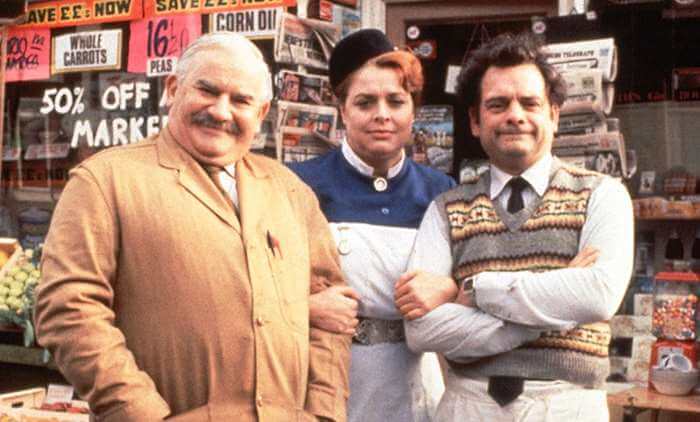
Open All Hours - Wellington Guernsey & Joseph Ascher - John Lee
The theme tune from one of Britain's iconic comedy shows is in fact, an old tune entitled 'Alice, Where Art Thou' composed by Joseph Ascher, a Dutch composer and pianist. The opening title sequence of the show heard brass arranger, Max Harris performing his own version of the tune, who also composed the incidental music for the show. This light-hearted release coincides with the release of the new Open All Hours series starring David Jason who now runs the corner shop years later. A great easy going summer concert item and one that audience members will truly enjoy.(also playable by training bands)
In Stock: Estimated dispatch 1-3 working days
-
 £29.50
All About That Bass (Tuba!) - Kevin Kadish & Megan Trainor - Gavin Somerset
If you're looking to spice up your concert programme with something a little different, then look no further! It isn't too often that the lower brass get to take the limelight, however, this toe-tapping arrangement of the Meghan Trainor hit does just that! The work has become a huge hit and with a 50's & 60's 'Doo-Wap' feel, it works incredibly well for brass band. With the lower brass being kept busy, the big-band feel to the chorus and plenty of areas in which choreography would work well, this piece can't help but bring a smile to your face. The ultimate entertainment item and one that is enjoyed by all ages! A must have piece for your concerts this year. To download the Solo Cornet part, please CLICK HERE . To download the Solo Horn part, please CLICK HERE . To download the Solo Euphonium part, please CLICK HERE . To download the playback audio to play along to, please RIGHT CLICK HERE & Save As .
In Stock: Estimated dispatch 1-3 working days
-
 £29.50
Pie Jesu (From Requiem) - John Rutter - Adam Rutter
John Rutter's music is known across the world for its simplicity and memorable melodies. The 'Pie Jesu' from his requiem is certainly no exception. First performed in Dallas, Texas in 1985, the 6 movements completed Rutter's setting of the Roman Catholic Mass. The third movement (the 'Pie Jesu') is typical of the composer, featuring a strong melody line with subtle accompaniments. Now arranged for Solo Cornet by Adam Rutter, this slow melody allows the soloist to shine in one of the finest and most famous settings of the work to date. A great addition to any concert & soloists repertoire.
In Stock: Estimated dispatch 1-3 working days
 View Music
 Listen to MP3