
Results
-
 £17.50
The Mansions of Glory (Score Only)
"A young, talented and tender-hearted actress was passing along the street of a large city. Seeing a pale, sick girl lying upon a couch just within the half-open door of a beautiful dwelling, she entered, with the thought that by her vivacity and pleasant conversation she might cheer the young invalid. The sick girl was a devoted Christian, and her words, her patience, her submission and heaven-lit countenance so demonstrated the spirit of her religion that the actress was led to give some earnest thought to the claims of Christianity, and was thoroughly converted and became a true follower of Christ. She told her father, the leader of a theatre troupe, of her conversion and of her desire to abandon the stage, stating that she could not live a consistent Christian life and follow the life of an actress. Her father was astonished beyond measure and told his daughter that their living would be lost to them and their business ruined if she persisted in her resolution.Loving her father dearly, she was shaken somewhat in her purpose and partially consented to fill the published engagement to be met in a few days. She was the star of the troupe, and a general favourite. Every preparation was made for the play in which she was to appear. The evening came and the father rejoiced that he had won back his daughter and that their living was not to be lost. The hour arrived; a large audience had assembled. The curtain rose and the young actress stepped forward firmly, amid the applause of the multitude. But an unwonted light beamed from her beautiful face. Amid the breathless silence of the audience, she repeated: 'My Jesus, I love thee, I know thou art mine,For thee all the pleasures of sin I resign;My gracious Redeemer, my Saviour art thou,If ever I loved thee, my Jesus, 'tis now.' This was all. Through Christ she had conquered and, leaving the audience in tears, she retired from the stage, never to appear upon it again. Through her influence her father was converted, and through their united evangelistic labours many were led to God." 1. My Jesus, I love thee, I know thou art mine,For thee all the pleasures of sin I resign;My gracious Redeemer, my Saviour art thou,If ever I loved thee, my Jesus, 'tis now.2. I love thee because thou hast first lovd me,And purchased my pardon on Calvary's tree;I love thee for wearing the thorns on thy brow,If ever I loved thee, my Jesus, 'tis now.3. I will love thee in life, I will love thee in death, And praise thee as long as thou lendest me breath; And say, when the death-dew lies cold on my brow; If ever I loved thee, my Jesus, 'tis now.4. In mansions of Glory and endless delight,I'll ever adore thee and dwell in thy sight; I'll sing with the glittering crown on my brow: If ever I loved thee, my Jesus, 'tis now. William Ralph Featherstone
Estimated dispatch 7-14 working days
-
 £24.95
The Pilgrim's Prayer (Brass Band - Score and Parts) - Rouse, Sydney - Ball, Eric
Introduction - This could hardly be more simple. Inexperienced players may have some little difficulty in intonation, especially as they are starting 'cold', but a useful lesson can be learned in this connection when rehearsing these two bars. Section A - The music is hymn tune-like in character, but it should not become stilted. Close intonation is still a point to study, especially in view of the chromatic nature of some of the harmony. Section B - Aim to secure just balance in the accompanying parts, especially in the second phrase, where the 1st comets may be inclined to treat their moving part as an independent melody rather than part of the 'colour' background. Section C -This is a reprise of the first theme, with a different arrangement. The same comments apply, however. Section D - Here the music becomes more song-like in style, and provides an interesting contrast. The scoring, too, is more varied, and there are a number of points that call for attention. Note that the 1st and 2nd comets and 2nd trombone work as a team throughout; see that the pulsating, syncopated background adds to the movement of the music without giving a jerky effect; the new entries in the fourth and twelfth bars are to be made quite smoothly; and do not allow the texture of the music, especially in the last eight bars of the section, to overshadow the simplicity of the main tune. Section E - Here the first subject appears again. In the arrangement the colour contrasts are quite clear-cut. In order to secure true balance in the fifth and sixth bars, it may be necessary to adjust the amount of tone given by the bass trombone, as this part is not doubled as are the other parts. Section F -This section forms a simple but expressive coda.
Estimated dispatch 7-14 working days
-
£12.50
The Pilgrim's Prayer (Brass Band - Score only) - Rouse, Sydney - Ball, Eric
Introduction - This could hardly be more simple. Inexperienced players may have some little difficulty in intonation, especially as they are starting 'cold', but a useful lesson can be learned in this connection when rehearsing these two bars. Section A - The music is hymn tune-like in character, but it should not become stilted. Close intonation is still a point to study, especially in view of the chromatic nature of some of the harmony. Section B - Aim to secure just balance in the accompanying parts, especially in the second phrase, where the 1st comets may be inclined to treat their moving part as an independent melody rather than part of the 'colour' background. Section C -This is a reprise of the first theme, with a different arrangement. The same comments apply, however. Section D - Here the music becomes more song-like in style, and provides an interesting contrast. The scoring, too, is more varied, and there are a number of points that call for attention. Note that the 1st and 2nd comets and 2nd trombone work as a team throughout; see that the pulsating, syncopated background adds to the movement of the music without giving a jerky effect; the new entries in the fourth and twelfth bars are to be made quite smoothly; and do not allow the texture of the music, especially in the last eight bars of the section, to overshadow the simplicity of the main tune. Section E - Here the first subject appears again. In the arrangement the colour contrasts are quite clear-cut. In order to secure true balance in the fifth and sixth bars, it may be necessary to adjust the amount of tone given by the bass trombone, as this part is not doubled as are the other parts. Section F -This section forms a simple but expressive coda.
Estimated dispatch 7-14 working days
-
 £35.00
A-Wassailing (Brass Band - Score and Parts) - McKenzie, Jock
The English custom of 'Wassailing' is the seasonal act of singing carols door-to-door and wishing good health. The singers and dancers (often very poor) would do this in the hope of being offered a drink from the 'wassail bowl' - a warm broth of hot ale, fruit and spices; good sustenance for those who were cold and often homeless. It is thought that this carol (composer unknown) was composed c.1850. Duration: 2.30
Estimated dispatch 7-14 working days
-
 £39.95
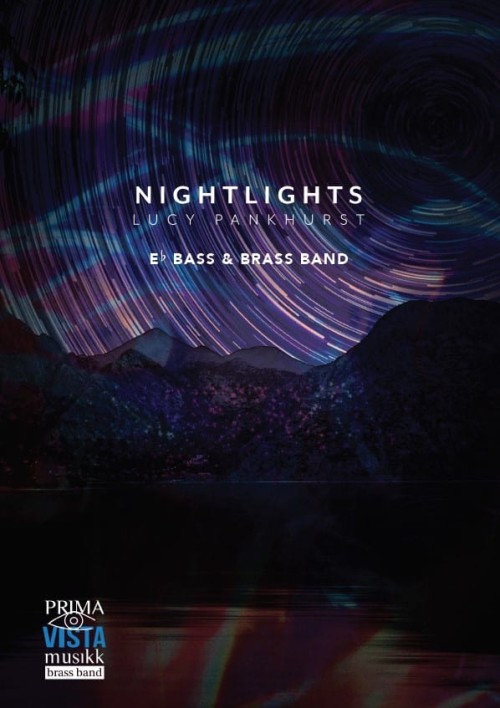
Nightlights (Eb Bass Solo with Brass Band - Score and Parts) - Pankhurst, Lucy
Nightlights was commissioned by Chris Jeans and Don Collins for Youth Brass 2000, to be used as part of their programme at the 2019 European Championships. Written during January 2019, Nightlights received its world premiere by Youth Brass 2000, conducted by Chris Jeans with Siobhan Bates as soloist, at the 2019 European Brass Band Championships in Montreux, Switzerland.Originally written as a Tenor Horn solo, this version for Tuba was arranged for and is dedicated to Dr Joanna Ross Hersey.Nightlights is intended to illustrate a winter's evening looking out across Lake Geneva from Montreux. Tiny lights appear beneath the mountains from faraway homes and vehicles, flickering in the distance and shimmering in the reflections on the water. Tiny, blinking nightlights against the inky blue of the clear sky. Thousands of stars shine above, blurring the boundaries between land, water, and the heavens into a sparkling ether. Transfixed, the bustle of sounds and lights from Montreux seems a lot further away than it is in reality. Eventually, each little light blinks out, one at a time, leaving the chill of the cold night air and an empty sky.Duration: 4.30
Estimated dispatch 7-14 working days
-
 £39.95
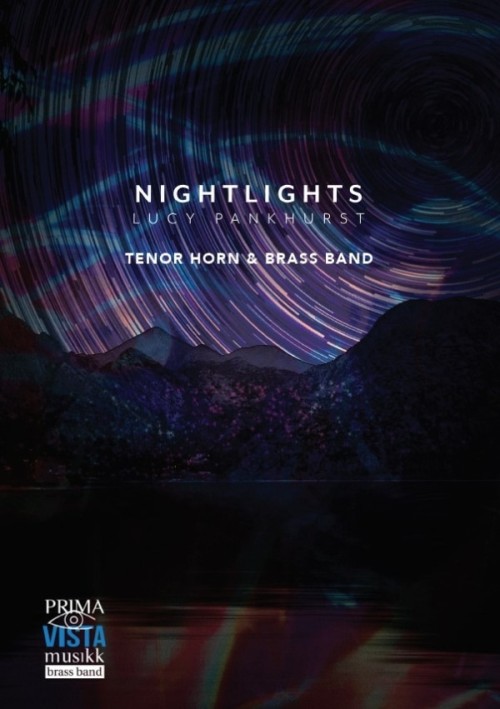
Nightlights (Tenor Horn Solo with Brass Band - Score and Parts) - Pankhurst, Lucy
Nightlights was commissioned by Chris Jeans and Don Collins for Youth Brass 2000, to be used as part of their programme at the 2019 European Championships. Written during January 2019, Nightlights received its world premiere by Youth Brass 2000, conducted by Chris Jeans with Siobhan Bates as soloist, at the 2019 European Brass Band Championships in Montreux, Switzerland.Nightlights is intended to illustrate a winter's evening looking out across Lake Geneva from Montreux. Tiny lights appear beneath the mountains from faraway homes and vehicles, flickering in the distance and shimmering in the reflections on the water. Tiny, blinking nightlights against the inky blue of the clear sky. Thousands of stars shine above, blurring the boundaries between land, water, and the heavens into a sparkling ether. Transfixed, the bustle of sounds and lights from Montreux seems a lot further away than it is in reality. Eventually, each little light blinks out, one at a time, leaving the chill of the cold night air and an empty sky.Duration: 4.30
Estimated dispatch 7-14 working days
 View Music