
Results
-
 £32.00
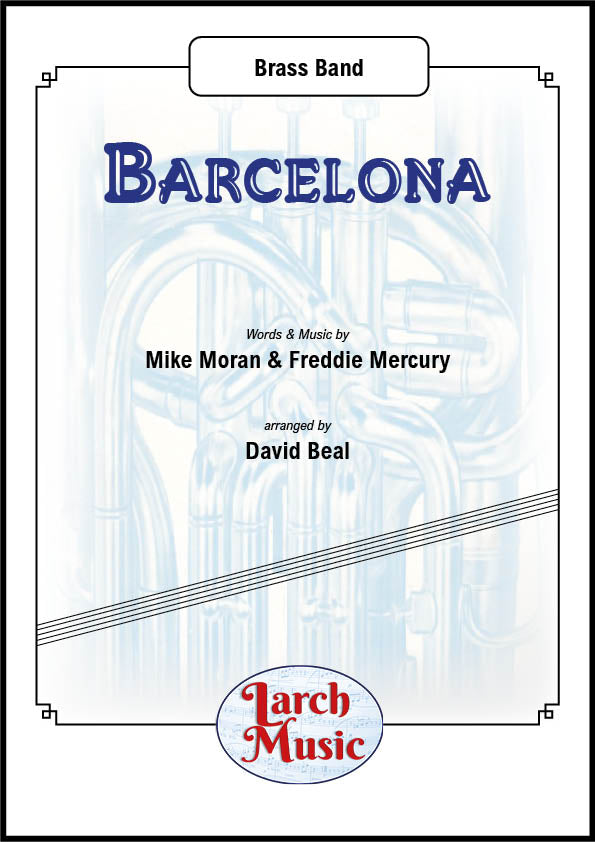
Barcelona - Vocal Duet or Cornet & Euphonium - Brass Band Sheet Music Full Score & Parts - LMAM054
COMPOSER: Mike Moran & Freddie MercuryARRANGER: David Beal"Barcelona" is a single released by Queen vocalist Freddie Mercury and operatic soprano Montserrat Caballe. A part of their collaborative album Barcelona, it also appeared on Queen's Greatest Hits III. The song reflects Mercury's love of opera with his high notes and Caballe's operatic vocals, backed by a full orchestra. Originally released in 1987, it was one of the biggest hits of Mercury's solo career, reaching number eight in the UK singles chart. After Mercury's death in 1991, it was featured at the 1992 Summer Olympics. The single was re-issued on 20 July 1992, after which the track climbed even higher, peaking at number two in the UK, the Netherlands and New Zealand. In 2004, BBC Radio 2 listed Barcelona at number 41 in its Sold On Song Top 100.Scored here for British Brass Band.
In Stock: Estimated dispatch 3-5 working days
-
 £30.00
Deus in Adjutorium
DescriptionMonteverdi's Vespro della Beata Vergine (Vespers for the Blessed Virgin) is a musical setting by Claudio Monteverdi of the evening vespers on Marian feasts, scored for soloists, choirs, and orchestra. It is an ambitious work in scope, style and scoring, and has a duration of around 90 minutes. Published in Venice with a dedication to Pope Paul V dated 1 September 1610 as Sanctissimae Virgini Missa senis vocibus ac Vesperae pluribus decantandae, cum nonnullis sacris concentibus, ad Sacella sive Principum Cubicula accommodata ("Mass for the Most Holy Virgin for six voices, and Vespers for several voices with some sacred songs, suitable for chapels and ducal chambers"), it is mercifully regularly shortened to Monteverdi's Vespers of 1610.Monteverdi was born and spent the first part of his working life in Cremona before moving to Mantua (where he composed the Vespers) and finally attaining one of the top jobs in Italian renaissance music as Maestro di Capella at the Basilica di San Marco in Venice. He is most famous for his vocal music, notably his madrigals and the earliest surviving opera, Orfeo.Watch a preview video of the brass band score below:
Estimated dispatch 7-14 working days
-
 £29.88
Intermezzo from Cavalleria Rusticana - Brass Band (Mascagni arr. Joshua Jameson)
VIEW SCORE PDF Cavalleria Rusticana is Mascagni's most popular opera, the Intermezzo being the instrumental interlude that accompanies villagers leaving an Easter service. This operatic gem brings relief to the tensions of a plot that realistically deals with tragic triangles of love. Rhythmically simple, this piece allows the conductor to focus on the execution of long, lyrical passages, including dynamics, legato line and phrasing. A beautiful treatment by Joshua Tyler Jameson of an equally beautiful work. PDF download includes score and full set of parts. Sheet music available from: UK - www.brassband.co.uk USA - www.solidbrassmusic.com Difficulty Level: 4th Section + Instrumentation: Soprano Cornet Eb Solo Cornet Bb Repiano Cornet Bb 2nd Cornet Bb 3rd Cornet Bb Flugel Horn Bb Solo Horn Eb 1st Horn Eb 2nd Horn Eb 1st Baritone Bb 2nd Baritone Bb 1st Trombone Bb 2nd Trombone Bb Bass Trombone Euphonium Bb Bass Eb Bass Bb Timpani Glockenspiel Percussion
In Stock: Estimated dispatch 1-3 working days
-
 £61.00
Caro Mio Ben - T. Giordano/Willy Hautvast
Here we have one of the most famous 'Arie antiche' (ancient aria's) from the 18th century, written in the style of Handel. For many years it has been attributed to Giuseppe Giordani, opera and sacred music composer of the Neapolitan school. However, recent investigations clearly established that this song had actually been composed by his son Tommaso (1733-1806). This delicate wind band arrangement by Willy Hautvast can also be performed with a vocal soloist or a mixed choir.
Estimated dispatch 10-14 working days
-
£60.00
Antiphonary - Lane, L
The Berkeley Family antiphonary is a beautiful book of texts and chants dating back to 1457, and this piece traces an historical timeline of Berkeley Castle's history, incorporating Vivaldi arias from an opera discovered at the castle in 2002. The music has moments of hymn-like reflection as well as great triumph and features the flugel horn.1st section + Duration 6 mins This piece exists in three other formats - Symphonic brass, Brass ensemble, and Wind dectet and piano. For details of these orchestrations please visit Composers Edition
In Stock: Estimated dispatch 1-3 working days
-
£50.00
Lascia Ch'io Pianga - Handel, G - Antrobus, M S
One of Handel's most beautiful and instantly recognisable melodies, Lascia ch'io pianga (Let Me Weep) comes from his celebrated opera Rinaldo and has touched the hearts of audiences around the world for centuries.This simple arrangement by Margie Antrobus was written especially for the voice of tenor horn Sheona White.A piece that is sure to leave a lasting impression and perhaps bring a tear to the eye of audiences everywhere.Difficulty: 4th section +Duration: 4 minutes 30 seconds Performed by Brassband Bozen beretsch and Sheona White
In Stock: Estimated dispatch 1-3 working days
-
£25.00
Lascia Ch'io Pianga (Score) - Handel, G - Antrobus, M S
One of Handel's most beautiful and instantly recognisable melodies, Lascia ch'io pianga (Let Me Weep) comes from his celebrated opera Rinaldo and has touched the hearts of audiences around the world for centuries.This simple arrangement by Margie Antrobus was written especially for the voice of tenor horn Sheona White.A piece that is sure to leave a lasting impression and perhaps bring a tear to the eye of audiences everywhere.Difficulty: 4th section +Duration: 4 minutes 30 secondsPerformed by Brassband Bozen beretsch and Sheona White
In Stock: Estimated dispatch 1-3 working days
-
 £19.95
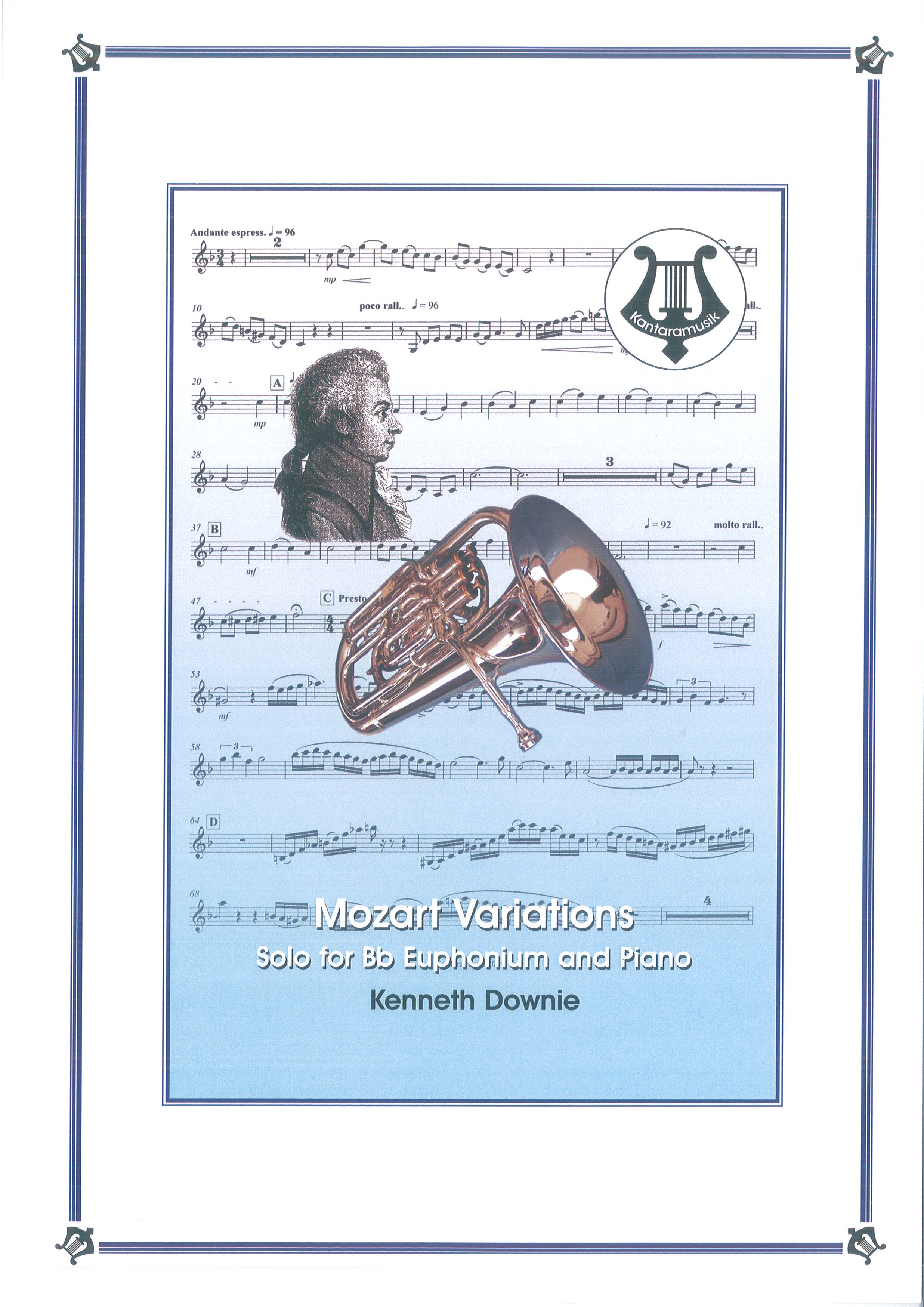
Mozart Variations (Euphonium and Piano)
The main theme of this music comes from Mozart's opera The Magic Flute, a very well-known melody which is sometimes associated with sacred words. It is a beautiful tune which lends itself to variation treatment including these very light-hearted examples. While working on this music, the composer had the idea of incorporating references to other well-known Mozart themes, again, with a rather tongue-in-cheek approach. The result is a high-spirited, flamboyant solo that will be fun to play and to listen to.
Estimated dispatch 7-14 working days
-
 £29.95
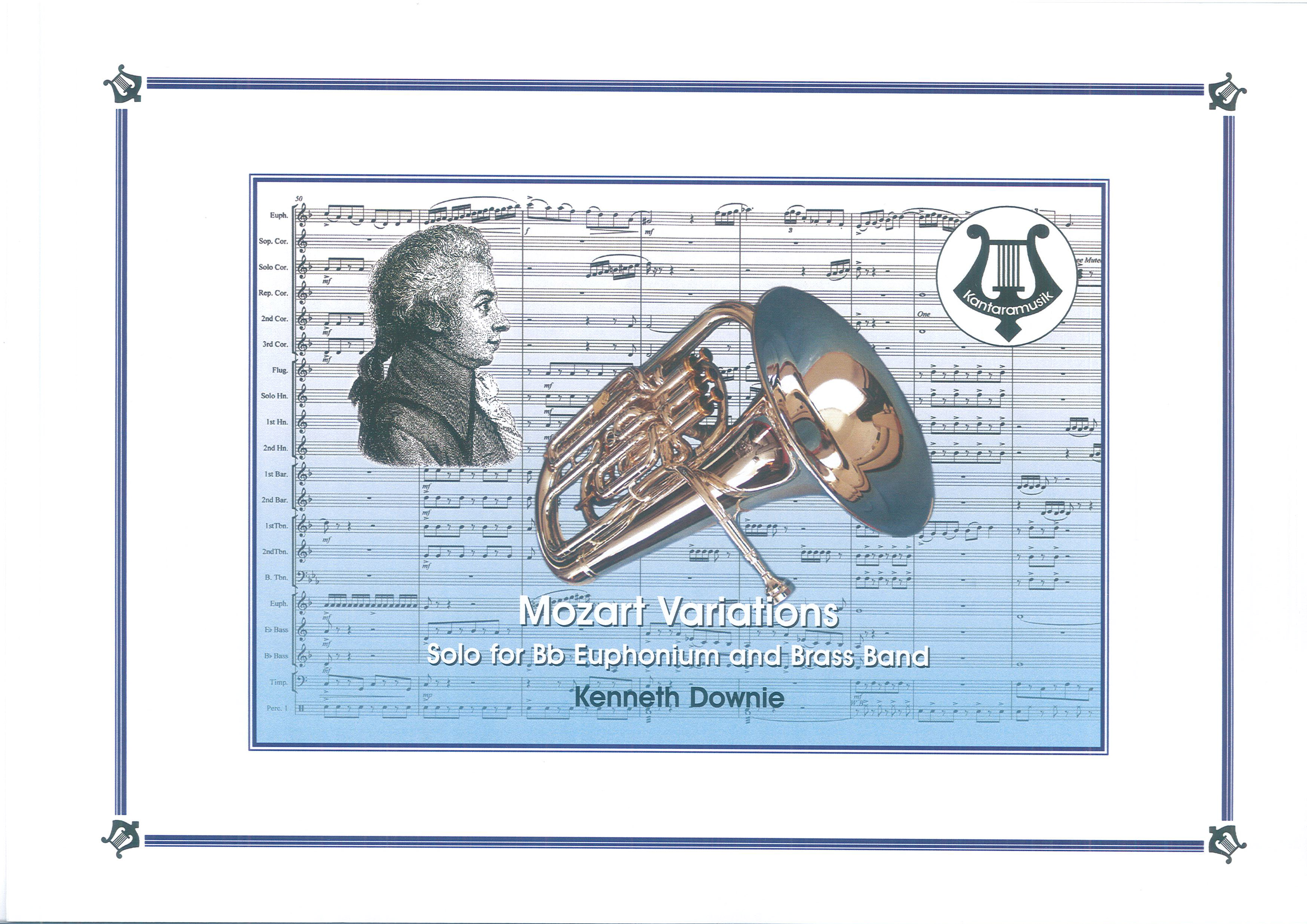
Mozart Variations - Euphonium Solo (Brass Band - Score and Parts)
The main theme of this music comes from Mozart's opera The Magic Flute, a very well-known melody which is sometimes associated with sacred words. It is a beautiful tune which lends itself to variation treatment including these very light-hearted examples. While working on this music, the composer had the idea of incorporating references to other well-known Mozart themes, again, with a rather tongue-in-cheek approach. The result is a high-spirited, flamboyant solo that will be fun to play and to listen to.
Estimated dispatch 7-14 working days
-
 £29.95
An Evening Prayer (from Hansel and Gretel) - Engelbert Humperdinck - Robert Childs
'An Evening Prayer' is from Act II of Humperdink's fairy opera Hansel and Gretel. The libretto, written by Humperdinck's sister Adelheid Wette, is based on the Grimms' Hansel and Gretel. The scene is set in a scary forest at night...
Estimated dispatch 5-7 working days
 Watch video
 View Music