
Results
-
 £64.00
Stories for Saroyan (Parts only) - Elgar Howarth
Stories for Saroyan was written for Robert Childs and has also been performed to great acclaim by his son David Childs. A concerto of stature, graced with the composer's hallmark scoring, intense passion, and enigma! The Saroyan of the title is the American author William Saroyan whose tales inspired the composition. Saroyan, who one the Pulitzer Prize and turned it down, became known for loosly structured, impressionistic plays and stories stressing his belief in people's basic innocence. Elgar Howarth has set the standard of modern brass arranging, and his original works feature largely in the Winwood Music catalogue
Estimated dispatch 7-9 working days
-
 £39.95
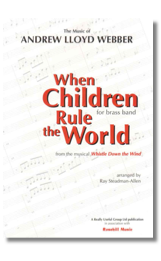
When Children Rule the World (Score and Parts) - Andrew Lloyd Webber arr. Ray Steadman-Allen
From the Andrew Lloyd Webber musical Whistle Down the Wind, this song is sung by a group of children who dream of the time when they will rule the world.
Estimated dispatch 7-9 working days
-
 £39.95
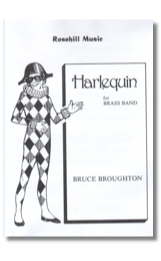
Harlequin (Score and Parts) - Bruce Broughton
Harlequin is the most popular of the comic servant characters from the Italian commedia dell'arte who, although a slow thinker, was acrobatic and nimble - he would never perform a simple action when the addition of a cartwheel or backflip would spice up the movement! These characteristics are aptly portrayed musically in Bruce Broughton's mini concert overture. Originally published for brass band in 1984, this popular work coveys all the hustle, bustle, and agility of the character in a finely crafted musical structure. Ideal as a concert opener or encore it is sure to delight audiences and provide players with an exciting new addition to their repertory. Duration: 2:30
Estimated dispatch 7-9 working days
-
 £25.00
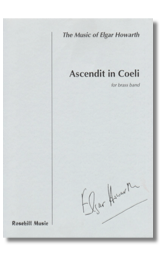
Ascendit in Coeli (Score only) - Elgar Howarth
Tradition (in the use of hymn-like tunes) and modernism are brought together in this memorial for the composer's father who adored hymn tunes. A fascinating work for the medium which is not as experimental as many suppose. Duration: 7:30
Estimated dispatch 7-9 working days
-
 £32.00
Ascendit in Coeli (Parts only) - Elgar Howarth
Tradition (in the use of hymn-like tunes) and modernism are brought together in this memorial for the composer's father who adored hymn tunes. A fascinating work for the medium which is not as experimental as many suppose. Duration: 7:30
Estimated dispatch 7-9 working days
-
 £42.00
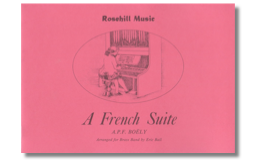
A French Suite (Score only) - Boely
Boely (1785-1858) was a French organist who preferred the traditions of Bach to the varying influences of the French Revolution. The five movements that make up this refreshing suite demand clarity of line, a fine balance in ensemble, and purity of tone and intonation - the classical style. Duration: 10:00
Estimated dispatch 7-9 working days
-
 £52.00
A French Suite (Parts only) - Boely
Boely (1785-1858) was a French organist who preferred the traditions of Bach to the varying influences of the French Revolution. The five movements that make up this refreshing suite demand clarity of line, a fine balance in ensemble, and purity of tone and intonation - the classical style. Duration: 10:00
Estimated dispatch 7-9 working days
-
 £46.00
Hymns at Heaven's Gate (Score only) - Elgar Howarth
A flourish: a crowd assembles at the gate of Heaven, saints and sinners. As in a film the immensity of the crowd is illustrated, and the camera zooms to focus onparticular groups and individuals. Monks sing a 'medieval' hymn, interrupted by the fanfares of mischievous seraphim; gradually the whole crown join in. The fanfares grow wilder, and grubby, naughty children enter, singing mock fanfares, making jazzy gestures and trying to sing a chirldren's hymn. They are joined by roughnecks who take up the fanfare idea. The camera zooms again at the entrance of Jesus. A commanding flourish causes consternation. Separate groups react, interrupted by mysterious percussion effects. Then, as the whole panorama explodes in sound, William Booth (founder of the Salvation Army) approaches awestruck. A triple Alleluia is followed by the third hymnand further Alleluias. A dance finale begins using material from the whole piece. A tumultuous climax preceds sudden quiet Alleluias, and the crown exits into Heaven to the music of the monks, reharmonised and transformed. The camera shots extend to the heavens and the stars. Duration: 15:00
Estimated dispatch 7-9 working days
-
 £58.00
Hymns at Heaven's Gate (Parts only) - Elgar Howarth
A flourish: a crowd assembles at the gate of Heaven, saints and sinners. As in a film the immensity of the crowd is illustrated, and the camera zooms to focus onparticular groups and individuals. Monks sing a 'medieval' hymn, interrupted by the fanfares of mischievous seraphim; gradually the whole crown join in. The fanfares grow wilder, and grubby, naughty children enter, singing mock fanfares, making jazzy gestures and trying to sing a chirldren's hymn. They are joined by roughnecks who take up the fanfare idea. The camera zooms again at the entrance of Jesus. A commanding flourish causes consternation. Separate groups react, interrupted by mysterious percussion effects. Then, as the whole panorama explodes in sound, William Booth (founder of the Salvation Army) approaches awestruck. A triple Alleluia is followed by the third hymnand further Alleluias. A dance finale begins using material from the whole piece. A tumultuous climax preceds sudden quiet Alleluias, and the crown exits into Heaven to the music of the monks, reharmonised and transformed. The camera shots extend to the heavens and the stars. Duration: 15:00
Estimated dispatch 7-9 working days
-
 £62.00
The Night To SIng (Score only) - Bramwell Tovey
The piece takes its inspiration from the VE Day celebrations of 1945. On 8 May 1945 the end of the war in Europe was celebrated in Great Britain. VE day (Victory in Europe day) gave rise to extraordinary public celebrations all over the country, from street parties to services of thanksgiving, to impromptu singing and community music-making. Contemporary reports mention Victorian ballads and Edwardian music hall songs, as well as the latest popular craze - the Conga. Festivities continued until dawn whereupon, finally surrendering to fatigue, the remnants of the crowd headed home on foot, long after the last bus. Some felt the celebrations to be inappropriate - much of Europe lay in ruins and war still raged in Asia. Almost everyone lamented the loss of somebody who had not survived. Duration: 16:50
Estimated dispatch 7-9 working days