
Results
-
 £73.99
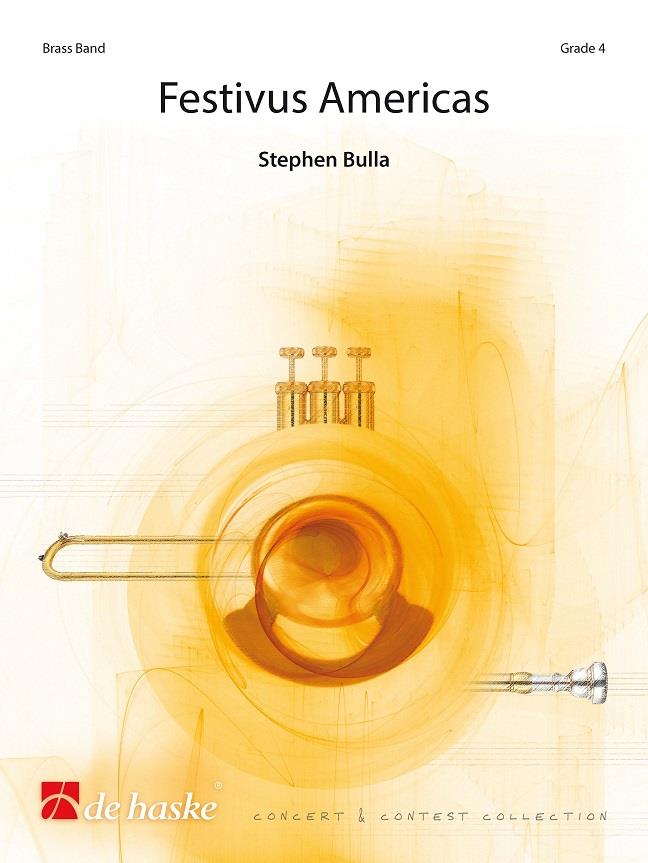
Festivus Americas (Brass Band - Score and Parts)
Dedicated to the North American Brass Band Association, this is music that is full of energy and dynamic extremes. In form it draws from the overture style, although the themes are self-existing and the piece is programmatic. Working well as a festival opener, it sets a mood of excitement. Following the rhythmic fanfares of the opening, the first theme is presented in the cornets followed by a return to the same rhythmic material. A second theme appears in the horn section and is developed, changing into a darker and sinister form of the same motif. Eventually a Maestoso section is reached, full of sustained block chords in the cornets and trombones, as the rest of the band counters with cascading lines that weave straight through the brighter instruments. Duration: 5.00
Estimated dispatch 7-14 working days
-
 £59.95
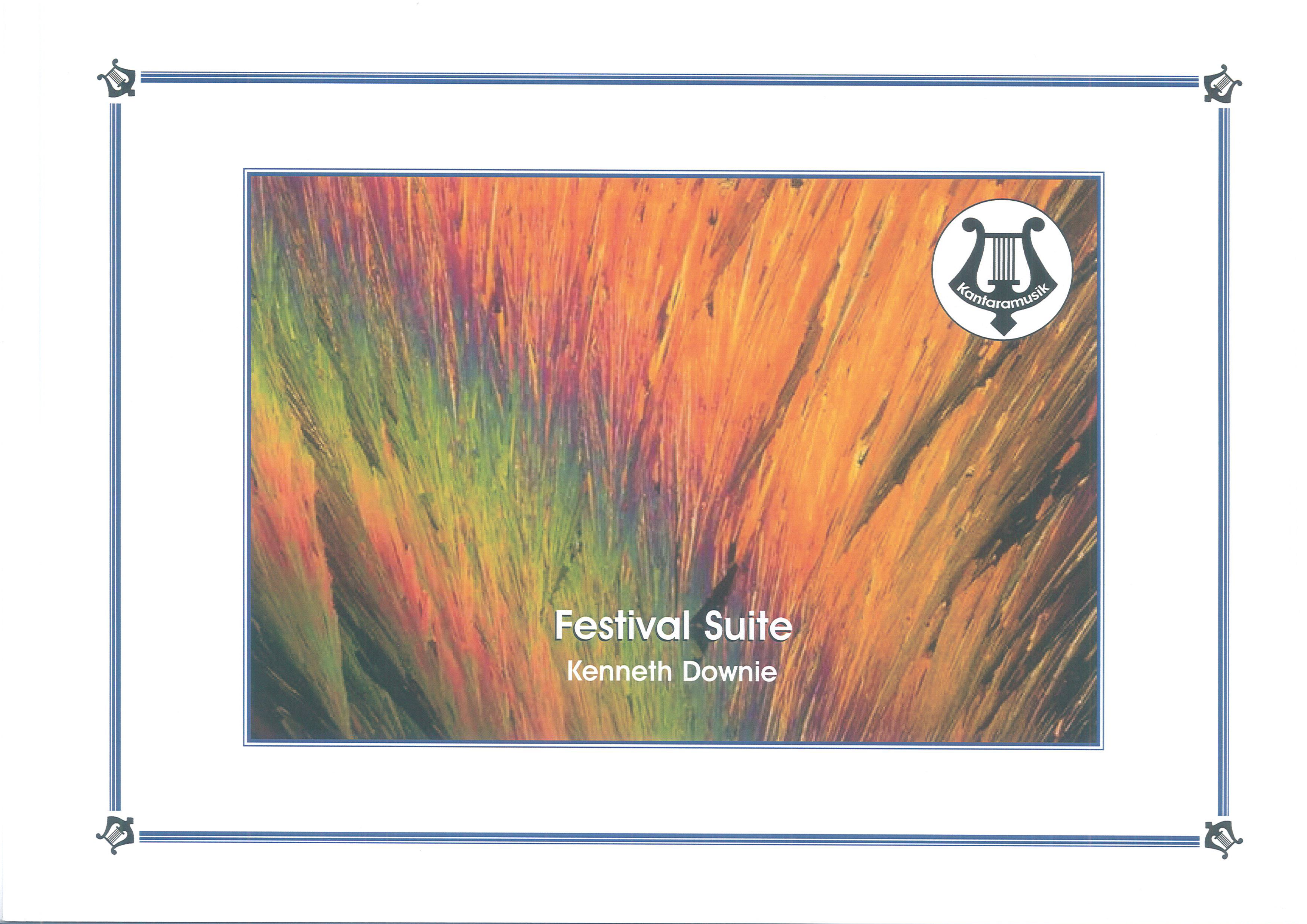
Festival Suite (Brass Band - Score and Parts)
This three movement suite for brass band was commissioned by the Solothurnischer Blasmusikverband (SOBV) in Switzerland for their 2009 Festival. The first movement, Energy, is appropriately lively in character. It is dominated by an agitated theme on trombones and cornets, driven by a percussion accompaniment, and complemented by pulsating counterpoint from the rest of the band. The second movement is called Repose and its opening melodious theme on cornets provides a welcome respite from the restlessness and verve of the opening movement. The lyrical nature of the music is sustained throughout. The finale, Suspense, opens with a theme containing more than a hint of foreboding which recurs several times. There are numerous abrupt changes of dynamics, and also a brightening of mood, before everything finishes in a blaze of sound.
Estimated dispatch 7-14 working days
-
 £27.00
Auld Lang Syne (Brass Band - Score and Parts)
It is a tradition in most English-speaking countries to sing this song at the stroke of midnight on New Year's Eve to usher in the New Year. The words are at least partially written by Robert Burns and the words "Auld Lang Syne" literally mean "old long ago" or "the good old days", providing a moment of reflection before moving forwards into the New Year.The tubular bells, although pitched, sound midnight when they enter at bar 10.This arrangement was prepared for Brass Band of the Western Reserve, musical director Keith M Wilkinson, to perform at First Night, Akron, Ohio, December 31st, 2007. The following choreography is suggested:Commence the performance with all the cornets scattered around the auditorium.At the end of bar 18 invite the audience to sing along with the band.At bar 27 the cornets move to stand in front of the other members of the band to lead to the stirring conclusion. Should auld acquaintance be forgot and never brought to mind?Should auld acquaintance be forgot and days of auld lang syne?For auld lang syne, my dear, for auld lang syne,We'll take a cup of kindness yet, for auld lang syne.
Estimated dispatch 7-14 working days
-
 £94.95
Dances and Arias (Brass Band - Score and Parts)
This work was commissioned by Boosey & Hawkes Band Festivals (with funds provided by the Arts Council of Great Britain) for the National Brass Band Championships of Great Britain, held at the Royal Albert Hall, London, on 7th October 1984.Dances and Arias is in one continuous movement, but as the title suggests is a series of alternating fast and slow sections as follows: Dance - Aria I - Dance (scherzo) - Aria II - Dance. The opening dance is energetic and introduces a four-note motif (on trombones) which is the basis for much of the melodic material in the work. Throughout, there is a continuous process of thematic cross-reference and transformation.The first aria unfolds a long melody on solo cornet, eventually continued by all the solo cornets, and dissolving into a shimmering harmonic background (muted cornets, horns and baritones) over which is heard a brief self-quotation on solo tuba. This leads into the second dance, a frenetic scherzo, followed by the second aria, in the style of a lament (solo euphonium, followed by two flugel horns). This builds to a powerful climax which subsides, leaving the percussion to introduce the final toccata-like dance. It transforms material from the opening before a coda brings the music to a triumphant close. The large percussion section is an integral part in the work and uses a wide variety of instruments including timpani, glockenspiel, vibraphone, xylophone, tubular bells, tom-toms, snare drum, bongos and tam-tam.
Estimated dispatch 7-14 working days
-
 £82.19
'Odyssey' Variations (Brass Band) Kevin Norbury
'Odyssey' Variations was composed as a result of a commission in May 2020 from Five Lakes Silver Band and its musical director, Christopher Ward. This music is based on an original theme that I first used in an earlier composition, Odyssey, which was the test piece for the European Brass Band Championships, held at Munich, Germany, in April 1999. I distinctly remember getting into my hotel room and turning on the television to be greeted by news coverage of the Columbine High School shooting, so that piece has always held some significance for me, though because of a very sad coincidence. The melody was originally a cornet solo in the central slow section of Odyssey and pitched deliberately to test the soloist. I have, more recently attempted a straightforward choral setting of the melody, and the harmonies I use in the three chorale-style settings at the start of these variations are loosely based on that setting. The melody is a setting of the familiar words of Be Thou My Vision, an old Irish hymn, translated by Mary E. Byrne, and versified by Eleanor H. Hull. The form of the work is as follows: Theme - three presentations Variation 1 - Allegro Variation 2 - Moderato (featuring the horns, baritones, euphoniums and basses) Variation 3 - Maestoso (featuring the cornets, flugel horn, and trombones) Variation 4 - Adagio Variation 5 - Allegretto Variation 6 - Largo - Moderato Variation 7 - Allegro molto Theme - Maestoso e sostenuto Finale - Allegro vivace - Adagio e allargando To view a video of Five Lakes Silver Band performing the work please visit: www.youtube.com/watch?v=vfLnld3bCw8 Sheet music available from: UK - www.brassband.co.uk USA - www.solidbrassmusic.com Difficulty Level: 1st Section + Instrumentation: Soprano Cornet Eb Solo Cornet Bb Repiano Cornet Bb 2nd Cornet Bb 3rd Cornet Bb Flugel Horn Bb Solo Horn Eb 1st Horn Eb 2nd Horn Eb 1st Baritone Bb 2nd Baritone Bb 1st Trombone Bb 2nd Trombone Bb Bass Trombone Euphonium Bb Bass Eb Bass Bb Timpani Percussion 1-3
In Stock: Estimated dispatch 1-3 working days
-
 £44.83
Boreas: The North Wind (Brass Band) Derek Jenkins
Boreas was an ancient Greek deity personifying the north wind. He was a winged god of ruthless disposition, which was rivaled only by the harsh wintry winds at his command. Boreas fell in love with Orithyia, the King's daughter. Contrary to his genuine nature, he attempted to woo her with sweet words of devotion. His efforts were in vain, and Orithyia failed to yield to his advances. With this rejection, Boreas's temper flared and he, once again, was overcome by his icy and merciless nature. Like Boreas, this work begins with slow, lyrical lines that quickly fade into an unrelenting fury of anger. Moments reminiscent of Boreas's words of affection appear, but they are quickly washed away as the piece escalates. This arrangement was written for Joseph Parisi and the Fountain City Brass Band as a small token of thanks. The original version for wind ensemble was commissioned by and written for Timothy Shade and the Bethel College Wind Ensemble. To view a video of Diamond Brass Band performing the work please visit: www.youtube.com/watch?v=Co4oreV7Hm4 Sheet music available from: UK - www.brassband.co.uk USA - www.solidbrassmusic.com Difficulty Level: 2nd Section + Instrumentation: 1 Soprano Cornet (Eb) 9 Cornets (Bb) 1 Flugelhorn 3 Tenor Horns (Eb) 2 Baritones (Bb) 2 Trombones (Bb) 1 Bass Trombone 2 Euphoniums (Bb) 2 Basses (Eb) 2 Basses (Bb) 4 Percussion
In Stock: Estimated dispatch 1-3 working days
-
 £67.24
Dreams of America (Brass Band) Derek Jenkins
Dreams of America was commissioned by the National Youth Brass Band of America. The concept of the 'American Dream' is an indelible part of the American psyche. Over time, notions of success, fame, and fortune have become synonymous with this idea. Some have achieved their personal 'American Dreams', and yet for others they often remain only a dream. Dreams of America takes a look at certain, generalised aspects of the 'American Dream' and pits them against the harsh realities faced by many, both in the past and present. To heighten these dichotomies, each movement is accompanied by a slideshow of historic and modern images related to the issues at hand. Movement 1: Yearning to Breathe Free explores the anger, fear, and subjugation that seems rampant in recent years, but has been present throughout the country's founding. Movement 2: Take my Stand looks at the role that change, protest, and equality has had and continues to have in our society. Movement 3: It Beckons and Beckons examines the beauty of nature and our role in preserving and protecting this country's natural wonders while illustrating the ease of which our environment can be ruined and destroyed. Movement 4: Sweet Land of Liberty reflects onthe composer's interpretation at what truly makes the United States of America a great country - the people who call this place home. The patriotic tune America the Beautiful has been woven throughout, in part for its poetic depiction of the American landscape and its call for "brotherhood from sea to shining sea!" Sheet music available from: UK - www.brassband.co.uk USA - www.solidbrassmusic.com Difficulty Level: 1st Section + Instrumentation: 1 Soprano Cornet (Eb) 9 Cornets (Bb) 1 Flugelhorn 3 Tenor Horns (Eb) 2 Baritones (Bb) 2 Trombones (Bb) 1 Bass Trombone 2 Euphoniums (Bb) 2 Basses (Eb) 2 Basses (Bb) 4 Percussion
In Stock: Estimated dispatch 1-3 working days
-
 £37.35
I was glad (Brass Band with optional Organ) Hubert Parry trs. Andrew Wainwright
I was glad was originally a choral introit which is a popular piece in the musical repertoire of the Anglican church. It is traditionally sung in the Church of England as an anthem at the coronation of the British monarch, most recently that of King Charles III in May 2023. This transcription for brass band combines the choral and accompaniment parts meaning it is playable as a standalone arrangement. An optional organ part is included to augment the brass. The cornet section is divided into two choirs to create an antiphonal effect. The 'Vivats' are included in this transcription but an optional cut is provided for that section. To view a follow-the-score video please visit https://www.youtube.com/watch?v=Vx95uSp1yU8 PDF download includes score and parts. Sheet music available from: UK - www.brassband.co.uk USA - www.solidbrassmusic.com Difficulty Level: 2nd Section + *Instrumentation: Soprano Cornet Eb Cornets 1-5 Bb (9 players required as a minimum) Flugel Horn Bb Solo Horn Eb 1st Horn Eb 2nd Horn Eb 1st Baritone Bb 2nd Baritone Bb 1st Trombone Bb 2nd Trombone Bb Bass Trombone Euphonium Bb Bass Eb Bass Bb Timpani Percussion *Additional transposed parts are available here for Horns in F, and Baritones, Trombones, Euphoniums and Tubas in Bass Clef.
In Stock: Estimated dispatch 1-3 working days
-
 £33.62
King Lily of the Valley (Euphonium & Baritone Feature w/Brass Band) Espen Haukas
Based on a poem by Gustaf Froding, King Lily of the Valley is a poetic and regal musical tribute to the delicate flower that, in Froding's verse, appears as a young king surrounded by both sorrow and beauty. Originally composed by David Wikander and arranged for male choir (TTBB) by Rasmus Krigstrom, this evocative work has been masterfully reimagined for brass band by Norwegian arranger and composer Espen Wallacher Haukas and created for Bjorsvik Brass's performance at Siddis Brass 2025. The brass band version retains the choral character and emotional depth of the original, weaving lush harmonies and lyrical phrasing into a rich soundscape. A deeply expressive addition to any brass band repertoire - blending Nordic choral tradition with the grandeur and warmth of the brass band sound. Scoring: Standard brass band instrumentation.(Note: Solo Cornets are marked TACET, providing a welcome opportunity for rest in longer programmes.) To view a rolling score video of the work please visit https://www.youtube.com/watch?v=AK5YPW4t3Oo Duration: Approx. 3.30 minutes Difficulty Level: 3rd Section + This PDF download includes the full score and parts. Sheet music available at www.brassband.co.uk (UK) or https://satradecentral.org (USA) Instrumentation: 1st Baritone Bb 1st Euphonium Bb 2nd Baritone Bb 2nd Euphonium Bb Soprano Cornet Eb Repiano Cornet Bb 2nd Cornet Bb 3rd Cornet Bb Flugel Horn Bb Solo Horn Eb 1st Horn Eb 2nd Horn Eb 1st Trombone Bb 2nd Trombone Bb Bass Trombone Bass Eb Bass Bb Timpani Percussion 1-2
In Stock: Estimated dispatch 1-3 working days
-
 £29.88
March - His Royal Banner (Brass Band) Jonathan Mead
This upbeat, foot-tapping march by Welsh composer Jonathan Mead features the two well known Welsh tunes of Aberystwyth and God Bless The Prince of Wales. Aberystwyth is set as a big bold bass solo and careful attention will need to be paid to make sure that it sounds clean and together. God Bless The Prince of Wales first appears as a traditional hymn tune, before returning in a more vibrant, lively style, with florid scalic passages for the solo cornets and euphoniums. The march was written with St David's Day in mind, although will be an appropriate addition to concert programme throughout the year as either an opener or finisher. Difficulty Level: 3rd Section + Sheet music available from: UK - www.brassband.co.uk USA - www.solidbrassmusic.com Instrumentation: Soprano Cornet Eb Solo Cornet Bb Repiano Cornet Bb 2nd Cornet Bb 3rd Cornet Bb Flugel Horn Bb Solo Horn Eb 1st Horn Eb 2nd Horn Eb 1st Baritone Bb 2nd Baritone Bb 1st Trombone Bb 2nd Trombone Bb Bass Trombone Euphonium Bb Bass Eb Bass Bb Percussion Clash Cymbals Glockenspiel
In Stock: Estimated dispatch 1-3 working days
 Watch video